The Birth of Video Games and Computer Games : The Late 1940's and 1950's
Reader notes : There are numerous debates over who created the "first video game", with answers depending on how
the term "first" is defined. The evolution of video arcade games represents many different industries, including scientific,
computer, amusement, military and consumer electronics. BMIGaming has attempted, after months of research and
study, to present what we believe is the most accurate recounting of early to modern video arcade game history below

The foundation for the first video games ever created was the
Cathode Ray Tube or CRT. Some of these early tubes, used by
missile defense systems starting in the late 1940's were adapted
into simple "video" games during the 50s. By the late 1950s, more
complex video games using CRT tubes were developed by defense
based workers, while gradually increasing their level of sophistication.
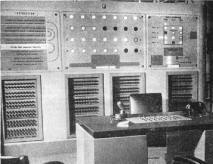
Early Cathode Ray Tube (CRT), 1940's
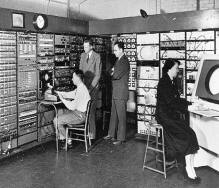 In 1950, Charly Adama created the "Bouncing Ball" video game program for MIT's new Whirlwind Computer, the first computer In 1950, Charly Adama created the "Bouncing Ball" video game program for MIT's new Whirlwind Computer, the first computer
to display "real-time" video signals, which was first demonstrated in April 1951 after being developed in the late 40's. This was the very first computer capable of displaying both real time text and graphics on a video terminal, which at this time was a large oscilloscope screen. It was also the first computer to use core memory, which permanently stores binary data on magnets within a wire grid.
While the "Bouncing Ball" game was not interactive, it was
the "precursor" of modern video games to come for years.
Whirlwind Computer - MIT (US) 1950's
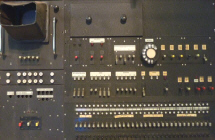
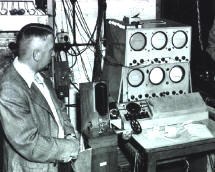
In February 1951, Christopher Strachey, a British computer scientist,
and one of the founders of denotational semantics, as well as a early pioneer in programming languages, designed a Checkers (Draughts) computer game program to run on the Pilot ACE computer, which was
one of the first computers built in the UK at the National Physical Laboratory (NPL) The rotary phone dial shown at center of the
picture was actually used to make game moves.
Pilot ACE Computer - NPL (UK) 1951
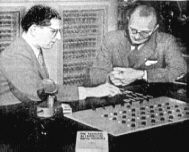
In May 1951, the NIMROD computer, created by the major UK electrical engineering and equipment firm Ferranti International was presented at
the Festival of Britain. Using a panel of lights for its display, it was designed exclusively to play the game of NIM; this was the very first instance of a digital computer designed specifically to play a game in recorded history. The picture at left shows a live game demonstration
at the festival in 1951.
NIM Game Demonstration - (UK) 1951
NIM, which is a ancient (dating back to at least the 16th Century) two-player mathematical game of strategy, in which players take turns removing objects from distinct heaps. NIMROD could play either the traditional or "reverse" form of the game. On each turn, a player must remove at least one object, and may remove any number of objects provided they all come from the same heap. NIM is a simple game, where you start with a number of piles of tokens. Each player in turn takes one or more tokens from any one pile, and the game continues until the last token is taken from the last pile.
NIMROD Computer - (UK), 1950's
 In 1952, "OXO", a computer program for Tic-Tac-Toe (also known In 1952, "OXO", a computer program for Tic-Tac-Toe (also known
as Noughts and Crosses) was created by Alexander S. Douglas
as illustration for his Ph.D. thesis on "human-computer interaction"
for the University of Cambridge. OXO was the first digital graphical simulation game, and ran on the EDSAC Computer at Cambridge,
which used a cathode ray tube as a visual display for programs, in
one of the world's first 'stored-program" computers. OXO is often
cited as the first true computer game. In OXO the player played
against the computer. OXO did not obtain widespread popularity
because the EDSAC was a computer unique to Cambridge.
"OXO" Game Demonstration - (US), 1952
 Video Showing Computer Simulation Of The " OXO " Computer Console Video Showing Computer Simulation Of The " OXO " Computer Console
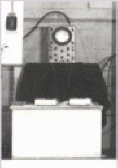
In 1958, a new video game called "Tennis for Two" was first developed at the Brookhaven National Labs (BNL) by physicist William A. Higinbotham, which simulated a game of tennis displayed on a oscilloscope. It is very important in
the history of video games as being one of the first electronic games to use
a graphical display. Tennis for Two is the predecessor of "PONG", one of the
most recognized video arcade games of all time, though there was never any
direct connection between these games.
"Tennis For Two", 1958

Higinbotham, a physics graduate of Cornell University, who worked at
Los Alamos on the Manhattan Project (and who had a love for pinball machines) wanted an interesting exhibit for a open house event at BNL
that would entertain and engage people where he was the head of the Instrumentation Division. He learned that one of Brookhaven's analog computers could calculate ballistic missile trajectories, and he used
this ability to form the video game's foundation and development.
William A. Higinbotham
(1910-1994)
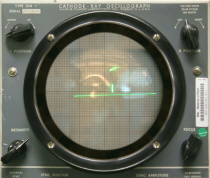
Higinbotham developed Tennis for Two in just a couple of weeks after his initial idea, and debuted the game at Brookhaven's open house in October, 1958. In this first historic video game, a "tennis ball", or blip
of light, bounces off a horizontal line at the bottom of a tiny five-inch diameter oscilloscope screen, with a vertical line in the center of the screen representing a tennis net. Players controlled the game with a small handheld metal box equipped with a dial and a push button (the first game controllers) as shown below.
"Tennis For Two" played on oscilloscope

Players interacted with the "ball" using one of the two analog aluminum game
controllers to click a button to hit the ball and use a knob to control the angle.
Hitting the ball also emitted a sound. The controller device was designed in
about two hours and was assembled within three weeks with the help of
Robert V. Dvorak. Excluding the oscilloscope assembly, the game's
circuitry took up approximately the space of modern microwave oven.
"Tennis For Two" Player Controls
 "Tennis For Two" was regarded as a huge hit during its initial showing "Tennis For Two" was regarded as a huge hit during its initial showing
on October 18, 1958 at BNL facility (shown at left). Hundreds of visitors waited for hours in line to play his new invention, and due to the game's popularity, an upgraded version was shown the following year, with enhancements including a larger screen and different levels of simulated gravity. After the event is concluded, Higinbotham doesn't bother trying
to copyright his very unique creation, because he thinks nothing will
ever come of it...
Brookhaven National Labs - (NY)
Video On The History Of " Tennis For Two '
Video Of Restored Tennis For Two Game In Use
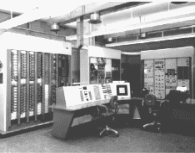 In 1959, a collection of interactive graphical programs were created In 1959, a collection of interactive graphical programs were created
on the TX-0 experimental computer at MIT. These included Mouse
in the Maze and Tic-Tac-Toe. Mouse in the Maze allowed users
to use a light pen to place maze walls, dots that represented bits of cheese, and (in some versions) glasses of martini. A virtual mouse represented by a dot was then released and would traverse the maze
to find the objects. Tic-Tac-Toe used the light pen as well to play
a simple game of checkers and crosses against the computer.
TX-0 Experimental Computer - MIT, 1959
The Early Era of Video Games and Video Arcade Games Development : The 1960's
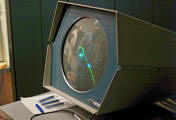 In 1961, a group of students at MIT, including Steve Russell, programmed In 1961, a group of students at MIT, including Steve Russell, programmed
a game titled Spacewar! on the DEC PDP-1, a new computer at the time.
The game pitted two human players against each other, each controlling
a spacecraft capable of firing missiles, while a star in the center of the screen created a large hazard for the crafts. The game was eventually distributed with new DEC computers and traded throughout the primitive
new "Internet". Spacewar ! is one of the first influential computer games.
Spacewar ! on DEC PDP-1 Computer
Video Clip Of A Restored PDP-11 "Spacewar !" Computer Video Game In Use
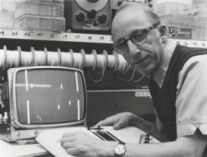 Meanwhile in the mid to late 1960's, the roots of modern day gaming, including the first home video game console were slowly taking place.. Meanwhile in the mid to late 1960's, the roots of modern day gaming, including the first home video game console were slowly taking place..
Ralph Baer, who has frequently been called the "Thomas Edison of
the Video Game" was working for a small electronics company in the Bronx called Loral back in 1951, and while discussing designs for a
new premium TV set with other colleagues, Baer suggested a new feature that might be included in the set to distinguish it from the competition by adding some sort of "interactive game" to the TV.
Ralph Baer - Working On Early Video Game
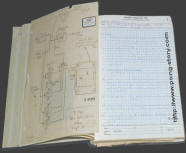 Fifteen years later in 1966 Fifteen years later in 1966
, while sitting bored at a bus stop, Ralph Baer rekindled his idea for an interactive video game machine. Refining his ideas into a four-page document, Baer wrote down various types of games that he thought would be feasible, such as action games, board games, sports games, chase games and others. The games would appear on either Channel 3 or 4, which he called Channel LP for "Let's Play!" Later that year, he drew an elementary schematic of a two-player game that he called a Chase Game. The game consisted of two squares (spots) that could be moved on the screen in both directions by two players.
Ralph Baer's Video Game Idea Book
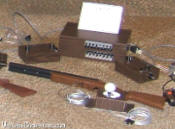
Baer, who in 1966 was working at military electronics contractor Sanders Associates in New Hampshire, engaged his co-worker Bill Harrison in
the pursuit of his project, and started and lead the development of the
first "Brown Box", the first home video game console and video game system, as well as creating a simple video game named Corndog,
the first video game ever to display on a standard television set.
"Brown Box" Video Game Components
Click Here For A Video Clip Of A Ralph Baer & Bill Harrison Playing with the "Brown Box"
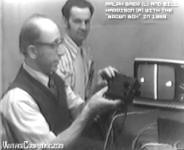
Later in 1967, with the assistance of Baer, Bill Harrison created the first light gun and developed several video games with Bill Rusch. Baer went
on in 1967 to demo the world's first playable video game on a TV set:
The Chase Game, consisting of two squares chasing each other, while continuing his game development, and in 1968 the first video console
game prototype was completed that was able to actually run several games such as tennis and target shooting, all combined in one unit.
Ralph Baer, Bill Rusch - Chase Game
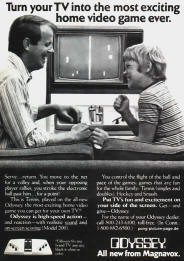
As a footnote to this era and Baer's work, in 1971, the "Brown Box" video game console prototype was refined and officially licensed to Magnavox,
and after being renamed the Magnavox Odyssey, the first home video gaming console for televisions, which was released to the public in 1972.
Baer also later created the first light gun and game for home television
use, sold grouped with a game expansion pack for the Odyssey known
as the Shooting Gallery. The light gun Baer came up with was the very
first mass-produced gaming peripheral for a video game or video console.
Side note: The first light-gun developed for arcade games was Atari's Qwak in 1974
Early Print Ad For Magnavox Odyssey
Video Game Console System - 1970's
Early Television Commercial For The Magnavox Odyssey
The Golden Age Of Video Arcade Games | 1970 - 1985
The Early 1970's saw the creation of today's multi-billion dollar worldwide market for Video Games, the establishment of the Arcade Gameroom and origins of the Digital Out-Of-Home Entertainment Industry.
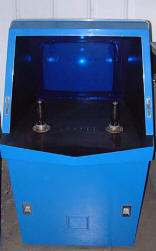 The "Galaxy Game" is the earliest known coin-operated video arcade game. The "Galaxy Game" is the earliest known coin-operated video arcade game.
It was first installed in September, 1971 at Stanford University in the Tresidder Union building, two months before the release of Computer Space, the first mass-produced video arcade game. The Galaxy Game was programmed by
Bill Pitts and Hugh Tuck. Like Computer Space, it was a yet another version
of the existing " Spacewar ! " video game created in the early 1960s.
The game cost around $20,000 to build, using a DEC PDP-11 computer and
a vector display terminal. The game cost 10 cents to play, or three games for
25 cents. Only one unit was built initially. In 1972, improved hardware and processing power and allowed the expansion from four to eight consoles, allowing users to play against each other. The game remained popular on campus, with wait times for players as much as one hour, until it was
removed in 1979 due to damage to the game monitor screens.
" Galaxy Game " - 1971
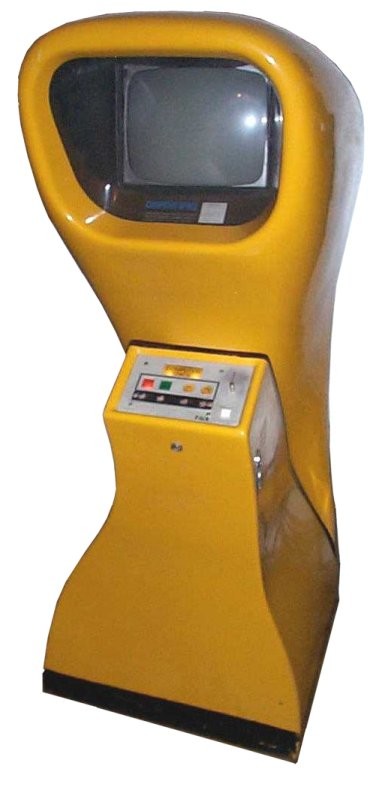
Also in 1971, Nolan Bushnell and Ted Dabney co-created a coin-operated
video arcade game version of Spacewar! and called it Computer Space.
Nutting Associates bought the game rights and manufactured over 1,500
Computer Space machines, with the release taking place in November 1971.
The game was unsuccessful due to its steep learning curve, but it was a
landmark in the industry formative years as being the first mass-produced
coin operated video arcade game, and the first offered for commercial sale.
Bushnell and Dabney then went on to found the storied Atari, Inc. in 1972
before releasing their next game that would change everything : Pong
Video Of "Computer Space" Arcade Game In Use
" Computer Space " - circa 1971
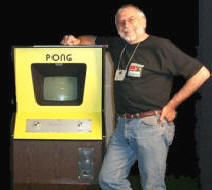
In 1972, PONG, a tennis sports video game featuring simple
2D graphics is released and becomes the first commercially
successful coin operated video arcade game in history.
PONG quickly became a huge hit and its success led to the
start of the modern video game industry as we know of today
Nolan Bushnell and the PONG Video Game
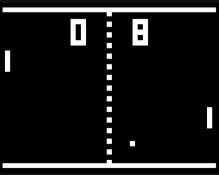 PONG was developed by Atari Inc., founded in June 1972 by Nolan Bushnell and Ted Dabney, and the actual game was created by PONG was developed by Atari Inc., founded in June 1972 by Nolan Bushnell and Ted Dabney, and the actual game was created by
Allan Alcorn from ideas by Bushnell who was influenced by an electronic ping-pong game already on the market in Magnavox's Odyssey home console game. Alcorn had no experience creating video games, but because of his experience with electrical engineering and computer science, he was asked by Bushnell to create a simple video game with one moving spot, two paddles,
and digits for score keeping as a training exercise to "warm-up"
to designing future video games
" PONG " Gameplay Screen Example
Video Clip - Original "PONG" Video Arcade Game In Use
 Three months into development, Bushnell told Alcorn he wanted the game to feature realistic sound effects and a roaring crowd. Dabney also wanted the game to "boo" and "hiss" when a player lost a round. Alcorn was running out of room on the circuit board and did not know how to create such sounds with digital circuits. After inspecting some of circuits, he discovered one could be Three months into development, Bushnell told Alcorn he wanted the game to feature realistic sound effects and a roaring crowd. Dabney also wanted the game to "boo" and "hiss" when a player lost a round. Alcorn was running out of room on the circuit board and did not know how to create such sounds with digital circuits. After inspecting some of circuits, he discovered one could be
used generate different tones for the game's sound effects.
To construct the prototype, Alcorn purchased a black and
white television set from a local store, placed it into a 4 foot
high wooden cabinet, and then soldered the wires into boards
to create the necessary circuitry, and PONG was born! The
PONG prototype impressed Bushnell and Dabney so much
they felt it could be a very profitable game, and decided to test
its marketability in public.
In September 1972, Bushnell and Alcorn installed the first PONG prototype at a local Northern California bar called Andy Capp's Tavern, which was selected because of the relationship the two had with the bar's manager, Bill Gaddis. The PONG video game was an instant hit at the tavern, and its popularity continued to grow until a few days later, when the game stopped working and Alcorn was called to fix it - Upon inspecting the machine, Alcorn found it was not broken as suspected, but because of its popularity with bar patrons, the coin mechanisms had jammed from the avalanche of quarters pouring
into the coin bucket in the cabinet base, which caused the machine to be temporarily unplayable...
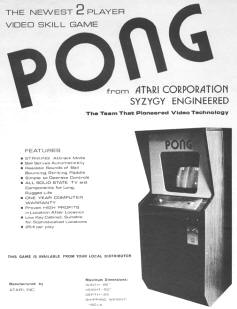
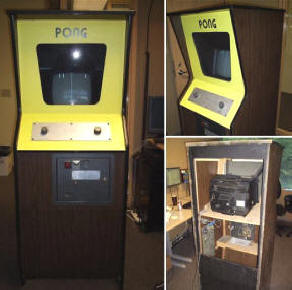 PONG went on from that point to be a great success PONG went on from that point to be a great success
for Atari, Inc. and by 1973, the company had filled over
2,500 orders, and in 1974 sold more than 8,000 units.
Atari eventually sold more than 35,000 units; however,
many more imitations were produced by competitors. Similar games appeared on the market in months, but
Atari could do little against the competitors as they had
not initially filed for patents on the solid state technology used in the game. Gaming experts and publications consider PONG to be the one game which launched
the video game industry as a lucrative enterprise, and PONG has been called one of the most historically significant titles in video game history, and the starting
point of the arcade "phenomenon" and the "digital out-of-home" entertainment industry. Today, the price of one
original PONG game in great shape goes for over $9000 !
Nolan Bushnell - 1982 Talk Show appearance speaking about PONG Development | Part 2
Nolan Bushnell - 2010 Modern-day interview about the early years of Video Games and Atari
The Golden Era of Video Games was a time of great technical breakthroughs and game design
creativity in arcade games. Video arcade games were designed in a wide variety of genres, while
game developers had to work within strict limits of available processor power and memory. This
era also saw the rapid spread of video arcades and gamerooms across North America, Europe
and Japan. At the same time, video games started to appear in supermarkets, restaurants, bars,
pubs, liquor stores, gas stations, bowling alleys storefronts and many other retail establishments
looking for extra income and customer traffic. Very popular video arcade games would more than
on occasion cause a crush of teenagers at arcades, eager to try the latest in public entertainment.
The two most successful arcade game companies of this era were Namco (the Japanese company
that created Pac-Man, Pole Position, and Dig Dug) and Atari (the US-based firm that first introduced
video games into arcades). These two companies wrestled for the top slot in American video arcades
for several years. Other prominent arcade companies such as Sega, Nintendo, Capcom, Konami,
Taito, Williams, Bally / Midway Manufacturing Company, Cinematronics and SNK were among
many others also played major roles in the early development of the video arcade game industry.
      
 The Golden Era saw the development and experimentation with new game hardware and human interface devices (HID) in video arcade games. New games were created using "vector display" monitors, which produced crisp lines as opposed to older "raster displays", and new player controls cropped up using more than joysticks and buttons - Atari introduced the first life-like steering wheel in Gran Trak 10 (1974), and again in a sit-down driving The Golden Era saw the development and experimentation with new game hardware and human interface devices (HID) in video arcade games. New games were created using "vector display" monitors, which produced crisp lines as opposed to older "raster displays", and new player controls cropped up using more than joysticks and buttons - Atari introduced the first life-like steering wheel in Gran Trak 10 (1974), and again in a sit-down driving
game called Night Driver in 1976, plus the first arcade game trackball in the 1978 Atari title Football, and also introduced the first light guns ever used in video games with Atari's QWAK (1974) along with Hogan's Alley by Nintendo later. Many new arcade game controls, such as pedals in racing arcade games and many other unique arcade game player control innovations also debuted in this era.
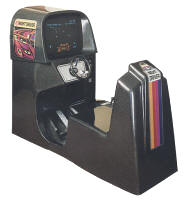 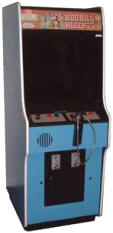 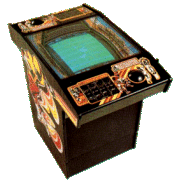
Atari Night Driver circa 1976 Nintendo Hogan's Alley circa 1984 Atari Football circa 1978
With the enormous success of the early video arcade games, dozens of game developers jumped into
the development and manufacturing of video arcade games. Some simply copied existing game ideas and turned out successful imitators, while others tried new concepts and defined new genres. Rapidly evolving hardware allowed new kinds of games which surpassed the capabilities of the earliest "shoot 'em up" type games. New arcade game titles introduced new types of game play, where a player's skill, timing and hand-eye coordination were more important than just shooting things as fast as possible.
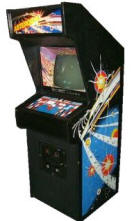 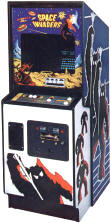 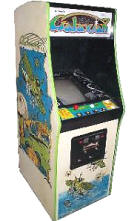 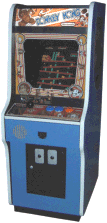 Midway Asteroids, c1978 Midway Space Invaders, c1978 Namco Galaxian, c1979 Donkey Kong, c1981
The arcade game industry truly entered its "Golden Age" in the late 70's and early 80's,with consumer awareness and market penetration of video arcade machines in bars, pubs, malls, storefronts and restaurants rising rapidly with introductions of such classic video arcade machines like Asteroids,
Space Invaders, Galaxian, Donkey Kong, and the timeless video arcade classic game, Pac-Man.

The release of Pac-Man (Pakku-Man, Puck-Man) by Namco in 1980 (Bally / Midway in the US)
was so successful and caused such a sensation that the game entered into mainstream popular
culture, and created what is now referred to as "Pac-Mania". Immensely popular in the US from
its original release to the present day, Pac-Man is universally considered as one of the classics
of the video game medium, and virtually synonymous with video games, and a important icon of
the 1980s pop culture. Pac-Man became a truly global social phenomenon that also inspired an
animated television series and a top-ten hit single, and Pac-Man, along with other popular video
arcade games from the Golden Era are often cited as an identifying cultural experience of both
Generation X and late-born Baby Boomers alike - and Pac-Man is the only video arcade game
from the era that is still in production today, distributed by Namco.... (Note : In 2018, the classic
arcade game PONG !, in a modern style cabinet, was re-introduced to the arcade marketplace.)
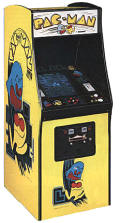 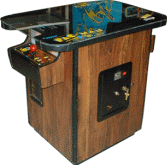
Original Pac Man Upright, Circa 1981 Original Pac Man Cocktail Table, Circa 1981
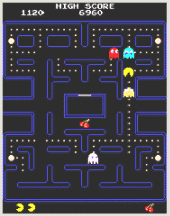
Puck-Man was developed over an eighteen month period, beginning
in April of 1979 primarily by a young Namco employee Toru Iwatani,
employing a nine-man team. The original game title was pronounced
"Pakku-Man", a contraction of "Paku-Paku" which describes the sound
of mouth movement when widely opened and closed rapidly. Although it
is often cited that the character's shape was inspired by a pizza missing
a slice, Iwatani admitted that it was really a "half-truth", and the character design also came from simplifying and rounding out the Japanese character for mouth, "Kuchi", as well as the basic concept of eating. Iwatani's efforts
to appeal to a wider audience beyond the typical demographics of young
boys and teenagers eventually led him to add elements of a maze.
When Puck-Man was first launched in Japan by Namco in 1980, it received a lukewarm response.
But the following year, the game was picked up for US market by Bally / Midway under the altered title
"Pac-Man". The name was changed from Puck Man to Pac-Man because it was thought that vandals might try to change the letter "P" in "Puck" to an "F", forming a common expletive. However, Puck-Man machines can still be found throughout Europe today. Midway also decided to redesigned the cabinet's artwork, as the Namco artwork for Puck-Man was deemed more costly to produce. change the letter "P" in "Puck" to an "F", forming a common expletive. However, Puck-Man machines can still be found throughout Europe today. Midway also decided to redesigned the cabinet's artwork, as the Namco artwork for Puck-Man was deemed more costly to produce.
When Pac-Man was released, most arcade video games in North America were primarily space shooters such as Space Invaders, Defender, or Asteroids. Pac-Man introduced an element of humor into video games that designers sought to imitate, and appealed to a wider demographic than the teenage boys
who flocked to the action-oriented games, and Pac-Man succeeded by creating a new game genre in
the fast growing video arcade industry, and for the first time, a game that really appealed to females.
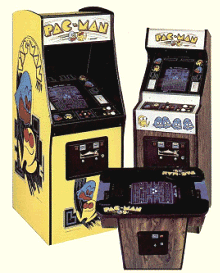 Pac-Man is often credited with being a landmark in video game Pac-Man is often credited with being a landmark in video game
history, and is among the most famous arcade games of all time.
The character also appears in more than 30 officially licensed game spin-offs, as well as in numerous unauthorized clones and bootlegs. According to the Davie-Brown Index, Pac-Man has the highest
brand awareness of any video game character among American consumers, recognized by 94 percent of them
Pac-Man's success in North America took competitors and distributors completely by surprise. Marketing executives who saw Pac-Man at a trade show prior to its release completely overlooked the game, while focusing on a racing car game called "Rally-X" as the game to buy that year. But Pac-Man quickly became far more popular than anything seen before in the game industry up to that point, and outstripped Asteroids as the best-selling arcade game
of the time, and would go on to sell over 350,000 units worldwide.
Pac-Man was so popular that there are several anecdotes from the era that many game owners had to empty the game's coin bucket every hour in order to prevent the game's coin mechanism from jamming from having too many coins in the receptacle. (Which also first happened to the very first PONG game placed on public display in California, which is a countlessly retold story of legend)
Pac-Man went on to become an icon of video game culture during the 1980s, and a wide variety of Pac-Man merchandise was marketed with the character's image, from t-shirts and toys to hand-held video game imitations and even specially shaped pasta.
Towards the end of the Golden Era of Video Arcade Games, national arcade chains emerged
such as Chuck E. Cheese's, Dave and Busters and other similar entertainment center concepts that combined a traditional restaurant and/or bar environment with arcade games, and helped established
the rapidly growing "Family Entertainment Center" (FEC) and digital "out-of-home" entertainment
industry, that continues to grow and be wildly successful to this very day...
|